Glamorous Gatsby Hair With Bluebeam Quantity Takeoff Tutorial
Bluebeam Quantity Takeoff Tutorial: Mastering Estimation and Costing in Construction
A Bluebeam quantity takeoff tutorial guides users in extracting quantities of materials and resources from construction plans, enabling accurate estimation and cost calculations. In real-world scenarios, such tutorials empower project managers, estimators, and contractors to efficiently determine the materials needed for a construction project, aiding in project planning and budgeting. They leverage Bluebeam Revu, a prominent software in the construction industry, to streamline quantity takeoff processes.
Learning the intricacies of quantity takeoff through Bluebeam tutorials offers significant benefits. These tutorials provide a standardized approach, ensuring consistency and accuracy in quantity calculations. They enhance productivity by automating repetitive tasks, minimizing manual errors, and enabling collaboration among project stakeholders. Historically, quantity takeoff was a time-consuming, error-prone process, but Bluebeam's digital tools and tutorials have revolutionized this aspect of construction.
This article delves into the essential components of a Bluebeam quantity takeoff tutorial, exploring the software's features, step-by-step guides, and best practices for accurate quantity extraction. It equips readers with the knowledge and skills necessary to master quantity takeoff using Bluebeam Revu, empowering them to enhance project efficiency, optimize material procurement, and ensure project success.
Bluebeam Quantity Takeoff Tutorial
Understanding the key components of a Bluebeam quantity takeoff tutorial is crucial for effective construction project planning and cost estimation. These aspects encompass definitions, functions, benefits, and challenges associated with the tutorial.
- Definition: A structured guide to extracting quantities from construction plans using Bluebeam Revu software.
- Function: Automates quantity takeoff processes, minimizing manual errors and improving accuracy.
- Benefits: Enhances productivity, standardizes quantity calculations, facilitates collaboration, and optimizes material procurement.
- Challenges: Requires familiarity with Bluebeam Revu, understanding of construction plans, and attention to detail.
- Takeoff Tools: Bluebeam Revu's Measurement, Count, and Area tools enable precise quantity extraction.
- Digital Plans: Utilizes digital construction plans in PDF or image formats, eliminating the need for paper plans.
- Quantification: Covers various construction elements, including concrete, steel, lumber, and finishes.
- Reports: Generates detailed quantity takeoff reports in various formats, such as CSV or Excel.
- Collaboration: Allows multiple users to work on the same project simultaneously, enhancing teamwork.
These key points provide a comprehensive overview of the essential aspects of a Bluebeam quantity takeoff tutorial. Understanding these concepts enables construction professionals to leverage the software's capabilities effectively, resulting in accurate quantity calculations, optimized material procurement, and enhanced project efficiency. The main article delves deeper into each of these aspects, providing detailed explanations, step-by-step guides, and best practices to help readers master quantity takeoff using Bluebeam Revu.
Definition
A Bluebeam quantity takeoff tutorial is fundamentally a structured guide that empowers users to extract quantities from construction plans utilizing Bluebeam Revu software. This definition encompasses several key facets:
- Step-by-Step Methodology: The tutorial provides a systematic approach, breaking down the quantity takeoff process into manageable steps, ensuring accuracy and consistency.
- Bluebeam Revu Integration: The tutorial is specifically tailored to Bluebeam Revu, leveraging its robust features and tools for efficient quantity extraction.
- Digital Plan Management: The tutorial enables users to work with digital construction plans in PDF or image formats, eliminating the need for paper plans and minimizing errors.
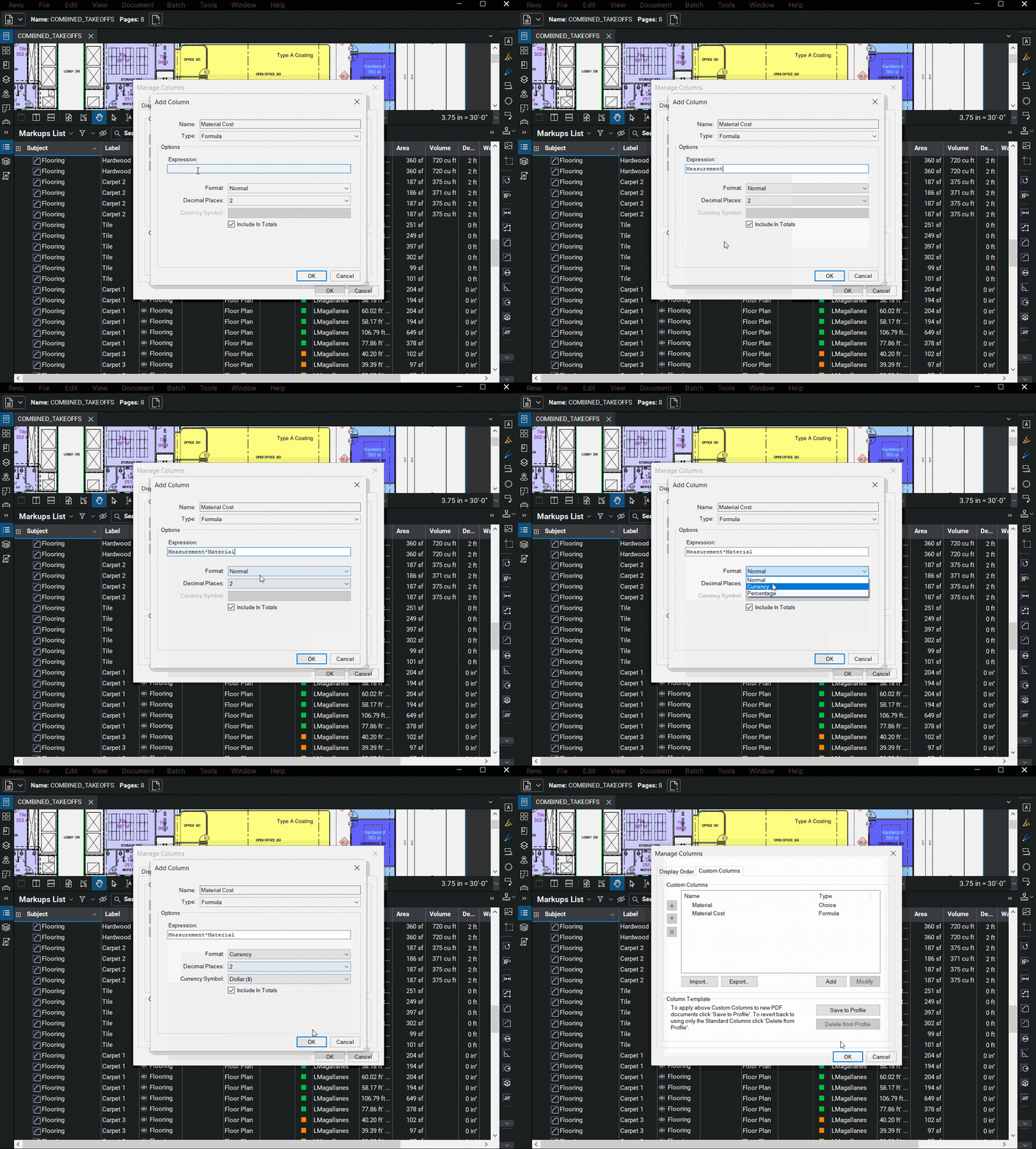
- Automated Calculations: The tutorial incorporates Bluebeam Revu's automated calculation capabilities, reducing manual calculations and enhancing productivity.
Understanding these facets highlights the comprehensive nature of a Bluebeam quantity takeoff tutorial. It provides a structured framework, leverages specialized software, utilizes digital plans, and automates calculations, empowering users to extract quantities accurately and efficiently. The subsequent sections of the article will delve deeper into each of these aspects, providing detailed explanations, step-by-step guides, and best practices to help readers master quantity takeoff using Bluebeam Revu.
Function
The automated capabilities of Bluebeam quantity takeoff tutorials revolutionize the traditional quantity takeoff process, bringing about a multitude of benefits that enhance accuracy and efficiency.
Cause and Effect: The automation features in Bluebeam tutorials directly contribute to minimizing manual errors and improving accuracy. Manual quantity takeoff processes are prone to human error due to the tedious and repetitive nature of the task. By automating calculations and measurements, Bluebeam tutorials eliminate these error-prone manual steps, resulting in more accurate quantity estimates.
Components: The automation function is an integral component of Bluebeam quantity takeoff tutorials. It encompasses a suite of tools and features within the software that streamline the quantity takeoff process. These include automated measurement tools, formula calculations, and digital plan overlay capabilities, all of which work seamlessly to extract quantities with precision.
Examples: Consider a construction project involving the installation of windows. Using a Bluebeam quantity takeoff tutorial, the estimator can utilize the software's automated measurement tools to accurately determine the dimensions and quantities of windows required for the entire project. This eliminates the need for manual measuring and calculations, reducing the likelihood of errors and ensuring material accuracy.
Applications: Understanding the function of automation in Bluebeam quantity takeoff tutorials has significant practical implications. It enables professionals to:
- Enhance project accuracy by minimizing manual errors and improving quantity calculations.
- Increase productivity by automating repetitive tasks, saving time and effort.
- Optimize material procurement by ensuring accurate material quantities, reducing wastage and costs.
- Improve collaboration by enabling seamless data sharing and real-time project updates.
Summary: In conclusion, the automation function in Bluebeam quantity takeoff tutorials plays a pivotal role in enhancing accuracy, minimizing manual errors, and streamlining the quantity takeoff process. It empowers professionals to work more efficiently, make informed decisions, and ultimately contribute to successful project outcomes. While challenges may arise in terms of software proficiency and data management, the benefits of automation far outweigh these hurdles, making it an essential aspect of modern quantity takeoff practices.
Benefits
The benefits of Bluebeam quantity takeoff tutorials are deeply intertwined with their functionality, making them an essential element of modern quantity takeoff practices. These benefits manifest in various ways:
Cause and Effect: Bluebeam quantity takeoff tutorials directly contribute to enhanced productivity by automating repetitive tasks, minimizing manual errors, and enabling seamless collaboration. The automation features streamline the quantity takeoff process, reducing the time and effort required for accurate quantity calculations. This allows professionals to allocate their time more efficiently, focusing on higher-value tasks and increasing overall productivity.
Components: The benefits of Bluebeam quantity takeoff tutorials are integral components of the software's functionality. The tutorials provide a structured approach, leveraging Bluebeam Revu's robust toolset to facilitate accurate quantity calculations. They incorporate digital plan management, automated measurement tools, and formula calculations, ensuring standardized quantity calculations across projects.
Examples: Consider a construction project involving the installation of electrical wiring. Using a Bluebeam quantity takeoff tutorial, the estimator can utilize the software's automated measurement tools to accurately determine the length of wiring required for the entire project. This eliminates the need for manual measuring and calculations, reducing the likelihood of errors and ensuring material accuracy. The tutorial also enables seamless collaboration, allowing multiple estimators to work on the same project simultaneously, sharing data and updates in real-time.
Applications: Understanding the benefits of Bluebeam quantity takeoff tutorials has significant practical implications. It empowers professionals to:
- Enhance project accuracy by minimizing manual errors and improving quantity calculations.
- Increase productivity by automating repetitive tasks, saving time and effort.
- Optimize material procurement by ensuring accurate material quantities, reducing wastage and costs.
- Improve collaboration by enabling seamless data sharing and real-time project updates.
Summary: In conclusion, Bluebeam quantity takeoff tutorials offer a multitude of benefits that directly enhance productivity, standardize quantity calculations, facilitate collaboration, and optimize material procurement. These benefits are deeply intertwined with the software's functionality, making them essential for modern quantity takeoff practices. While challenges may arise in terms of software proficiency and data management, the benefits of Bluebeam quantity takeoff tutorials far outweigh these hurdles, making them an invaluable tool for construction professionals.
Challenges
While Bluebeam quantity takeoff tutorials offer numerous benefits, they also present certain challenges that users must be aware of. These challenges stem from the inherent complexity of the software, the technical nature of construction plans, and the importance of accuracy in quantity takeoff.
Cause and Effect: The challenges associated with Bluebeam quantity takeoff tutorials primarily revolve around the need for specialized knowledge and skills. Unfamiliarity with Bluebeam Revu's interface, lack of understanding of construction plans, and insufficient attention to detail can lead to inaccurate quantity calculations, costly errors, and project delays. Conversely, proficiency in the software, thorough comprehension of construction plans, and meticulous attention to detail are crucial for successful quantity takeoff using Bluebeam tutorials.
Components: The challenges posed by Bluebeam quantity takeoff tutorials are integral components of the learning process. These challenges demand that users acquire the necessary knowledge and skills to effectively utilize the software and produce accurate quantity estimates. The tutorials provide a structured approach and guidance, but users must actively engage with the material, practice using the software, and develop a deep understanding of construction plans to overcome these challenges.
Examples: Consider a scenario where an estimator uses a Bluebeam quantity takeoff tutorial to calculate the amount of concrete required for a foundation. If the estimator is not thoroughly familiar with Bluebeam Revu's measurement tools or does not pay close attention to the dimensions and specifications in the construction plans, they may make errors in their calculations. This could result in incorrect concrete quantities, potentially leading to delays, cost overruns, and structural issues.
Applications: Understanding the challenges associated with Bluebeam quantity takeoff tutorials is essential for users to approach the learning process effectively. By acknowledging these challenges, users can focus on developing the necessary skills, studying construction plans diligently, and maintaining meticulous attention to detail throughout the quantity takeoff process. This proactive approach minimizes the risk of errors, ensures accurate material estimates, and contributes to successful project outcomes.
Summary: In conclusion, the challenges posed by Bluebeam quantity takeoff tutorials emphasize the importance of specialized knowledge, technical proficiency, and unwavering attention to detail. These challenges are inherent to the complexity of the software, the technical nature of construction plans, and the critical role of accuracy in quantity takeoff. By embracing these challenges and investing in skill development, users can harness the full potential of Bluebeam tutorials to produce accurate quantity estimates, optimize material procurement, and contribute to efficient project execution.
Takeoff Tools
Takeoff tools are fundamental components of Bluebeam quantity takeoff tutorials, empowering users to extract accurate quantities from construction plans. Bluebeam Revu offers a suite of specialized tools, including the Measurement, Count, and Area tools, that streamline the quantity extraction process, ensuring precision and efficiency.
- Measurement Tool:
The Measurement tool allows users to accurately measure lengths, areas, and volumes. It supports various measurement units and provides precise dimensions for linear elements, surfaces, and objects.
- Count Tool:
The Count tool automates the counting of repetitive elements in construction plans, such as doors, windows, or fixtures. It leverages advanced object recognition algorithms to quickly and accurately determine quantities.
- Area Tool:
The Area tool precisely calculates the area of complex shapes and surfaces within construction plans. It enables users to define custom boundaries and exclude specific regions, ensuring accurate quantity extraction for irregular areas.
These takeoff tools work seamlessly together, enabling users to perform comprehensive quantity extraction tasks with ease. By utilizing these tools effectively, professionals can minimize manual errors, enhance productivity, and produce highly accurate quantity estimates. The Measurement, Count, and Area tools in Bluebeam Revu empower users to extract precise quantities, driving informed decision-making and successful project outcomes.
Digital Plans
The advent of digital plans has revolutionized the field of quantity takeoff, enabling seamless integration with Bluebeam quantity takeoff tutorials. Digital plans, stored in PDF or image formats, provide a multitude of benefits that enhance the efficiency, accuracy, and accessibility of quantity takeoff processes.
Cause and Effect: The use of digital plans in Bluebeam quantity takeoff tutorials has a direct impact on the overall workflow and outcomes. By eliminating the need for paper plans, digital plans streamline the quantity takeoff process, reducing the risk of errors and omissions. The digital format allows for easy manipulation, editing, and sharing of plans, facilitating collaboration among project stakeholders and enabling real-time updates.
Components: Digital plans serve as a fundamental component of Bluebeam quantity takeoff tutorials, providing the necessary visual information for accurate quantity extraction. The tutorials guide users in utilizing Bluebeam Revu's powerful tools to measure, count, and calculate quantities directly from digital plans. The integration of digital plans with the software's measurement and calculation capabilities enables precise and efficient quantity takeoff.
Examples: In a construction project involving the installation of electrical wiring, a Bluebeam quantity takeoff tutorial would guide the user to import the digital plan into Bluebeam Revu. Using the software's measurement tool, the user can accurately determine the length of wiring required for each circuit, taking into account bends, corners, and obstacles. This digital approach eliminates the need for manual measurements and calculations, reducing the likelihood of errors and ensuring material accuracy.
Applications: Understanding the significance of digital plans in Bluebeam quantity takeoff tutorials has practical implications for construction professionals. The ability to work with digital plans enables:
- Enhanced Collaboration: Multiple users can access and update the digital plans simultaneously, fostering effective collaboration among project stakeholders.
- Improved Accuracy: Digital plans eliminate the potential errors associated with manual measurements and calculations, leading to more precise quantity estimates.
- Increased Productivity: The automation features of Bluebeam Revu, combined with digital plans, streamline the quantity takeoff process, saving time and effort.
Summary: In conclusion, the use of digital plans in Bluebeam quantity takeoff tutorials brings numerous advantages, transforming the traditional quantity takeoff process into a more efficient, accurate, and collaborative endeavor. While challenges may arise in terms of software proficiency and data management, the benefits of digital plans far outweigh these hurdles. Embracing digital plans empowers construction professionals to work smarter, make informed decisions, and contribute to successful project outcomes.
Quantification
Quantification is a critical aspect of Bluebeam quantity takeoff tutorials, as it enables users to extract quantities for a wide range of construction elements, forming the basis for accurate material estimation and cost calculation.
- Concrete Quantification:
Concrete quantification involves determining the volume of concrete required for various structural elements, such as foundations, slabs, and columns. It considers dimensions, reinforcement, and formwork.
- Steel Quantification:
Steel quantification involves calculating the weight or length of steel members used in structural framing, reinforcement, and miscellaneous components. It accounts for different steel grades, shapes, and sizes.
- Lumber Quantification:
Lumber quantification determines the volume or number of lumber pieces required for framing, sheathing, and other wood-based components. It considers species, dimensions, and grades.
- Finishes Quantification:
Finishes quantification involves estimating the quantities of materials used for interior and exterior finishes, such as drywall, paint, flooring, and fixtures. It considers coverage rates, dimensions, and application methods.
Reports
The reporting capabilities of Bluebeam quantity takeoff tutorials play a crucial role in presenting and disseminating quantity takeoff data. These tutorials enable users to generate detailed quantity takeoff reports in a variety of formats, including CSV and Excel, providing flexibility and compatibility with different workflows and software.
- Structured Data Output:
Quantity takeoff reports provide a structured and organized representation of extracted quantities, making it easy to review, analyze, and share data with stakeholders.
- Customizable Formats:
Bluebeam quantity takeoff tutorials offer customizable report formats, allowing users to tailor reports to specific project requirements and preferences.
- Export to Common Applications:
The ability to export reports to formats such as CSV and Excel enables seamless integration with other software applications, such as spreadsheets and databases, for further analysis and processing.
- Data Exchange and Collaboration:
Quantity takeoff reports facilitate data exchange and collaboration among project team members, ensuring that everyone has access to the latest and most accurate quantity information.
Collaboration
Within the context of Bluebeam quantity takeoff tutorials, collaboration is a key aspect that empowers multiple users to work seamlessly on the same project concurrently, fostering effective teamwork and enhancing overall project efficiency.
- Real-Time Data Sharing:
Bluebeam quantity takeoff tutorials enable real-time data sharing among project team members, allowing them to access and update the same project data simultaneously, eliminating the need for manual data transfer and reducing the risk of errors.
- Centralized Platform:
These tutorials provide a centralized platform for project collaboration, where all relevant information, including digital plans, takeoff data, and reports, is stored in a single location, ensuring that everyone has access to the most up-to-date project information.
- Concurrent Editing:
Bluebeam allows multiple users to work on different parts of the same project simultaneously, facilitating concurrent editing and expediting the quantity takeoff process. This eliminates the need for sequential editing and minimizes project delays.
- Integrated Communication:
Bluebeam quantity takeoff tutorials incorporate integrated communication tools, such as messaging and commenting features, enabling team members to communicate and collaborate directly within the software, improving coordination and reducing the need for external communication channels.
These collaborative features of Bluebeam quantity takeoff tutorials foster teamwork, streamline communication, and enhance overall project efficiency. By enabling real-time data sharing, providing a centralized platform, facilitating concurrent editing, and integrating communication tools, these tutorials empower project teams to work collaboratively, reduce errors, and deliver accurate quantity takeoff results.
Frequently Asked Questions about Bluebeam Quantity Takeoff Tutorials
This section aims to address common questions and clarify aspects related to Bluebeam quantity takeoff tutorials, providing valuable insights to enhance your understanding and application of these tutorials.
Question 1: What is the purpose of a Bluebeam quantity takeoff tutorial?
A Bluebeam quantity takeoff tutorial guides users in utilizing Bluebeam Revu software to extract quantities from construction plans accurately. It provides a step-by-step approach, leveraging Bluebeam's measurement, count, and area tools to determine material quantities efficiently.
Question 2: What are the benefits of using a Bluebeam quantity takeoff tutorial?
Bluebeam quantity takeoff tutorials offer several benefits, including enhanced accuracy by minimizing manual errors, increased productivity through automation, standardized quantity calculations ensuring consistency, and optimized material procurement reducing wastage and costs.
Question 3: Is prior knowledge of Bluebeam Revu necessary for these tutorials?
While familiarity with Bluebeam Revu is beneficial, most tutorials provide a comprehensive introduction to the software's essential features. They guide users through the quantity takeoff process, covering measurement tools, digital plan management, and report generation.
Question 4: What types of construction elements can be quantified using these tutorials?
Bluebeam quantity takeoff tutorials cover a wide range of construction elements, including concrete, steel, lumber, finishes, and more. They provide specific instructions on quantifying each element, considering dimensions, shapes, and industry-standard calculation methods.
Question 5: Can multiple users collaborate on a quantity takeoff project using Bluebeam?
Yes, Bluebeam quantity takeoff tutorials support collaborative workflows. They allow multiple users to access and work on the same project simultaneously, facilitating real-time data sharing, concurrent editing, and integrated communication, enhancing teamwork and project efficiency.
Question 6: What output formats are available for quantity takeoff reports?
Bluebeam quantity takeoff tutorials enable users to generate detailed quantity takeoff reports in various formats, including CSV and Excel. These formats provide flexibility and compatibility with different software applications, enabling easy data export, further analysis, and integration with other project management tools.
These FAQs provide essential insights into Bluebeam quantity takeoff tutorials, addressing common concerns and clarifying key aspects. By understanding these concepts, you can effectively leverage these tutorials to enhance your quantity takeoff skills and contribute to successful project outcomes.
In the next section, we will delve deeper into the step-by-step process of using a Bluebeam quantity takeoff tutorial, providing practical guidance and best practices to ensure accurate and efficient quantity extraction.
Tips for Mastering Bluebeam Quantity Takeoff Tutorials
This section provides practical tips and best practices to help you make the most of Bluebeam quantity takeoff tutorials and enhance your skills in accurate quantity extraction.
Tip 1: Start with the Basics: Begin by familiarizing yourself with the Bluebeam Revu interface, measurement tools, and digital plan management features. A solid understanding of these fundamentals will lay the foundation for successful quantity takeoff.
Tip 2: Utilize Templates: Take advantage of pre-built Bluebeam templates designed for quantity takeoff. These templates provide a structured approach, saving time and ensuring consistency in your quantity extraction process.
Tip 3: Master Measurement Tools: Proficiency in using Bluebeam's measurement tools is crucial. Practice measuring lengths, areas, and volumes accurately, paying attention to units and dimensions to minimize errors.
Tip 4: Leverage Automation: Utilize Bluebeam's automation features to streamline repetitive tasks. Automate calculations, apply formulas, and use batch processing to save time and improve productivity.
Tip 5: Collaborate Effectively: When working on collaborative projects, communicate clearly with team members, share project updates regularly, and utilize Bluebeam's collaboration tools to avoid conflicts and ensure smooth workflows.
Tip 6: Verify and Review: Always verify and review your quantity takeoff results thoroughly. Double-check measurements, calculations, and formulas to identify and correct any errors before finalizing your estimates.
By following these tips, you can master Bluebeam quantity takeoff tutorials, enhance the accuracy and efficiency of your quantity extraction process, and contribute to successful project outcomes.
In the final section of this article, we will explore advanced techniques and best practices for optimizing your Bluebeam quantity takeoff workflows, enabling you to take your skills to the next level and deliver exceptional results.
Conclusion
In exploring the intricacies of Bluebeam quantity takeoff tutorials, this article has illuminated key ideas and findings that underscore the significance of these tutorials in modern construction practices.
- Accuracy and Efficiency: Bluebeam quantity takeoff tutorials empower users with automated tools and standardized processes, minimizing manual errors and enhancing productivity, leading to accurate and efficient quantity extraction.
- Collaboration and Data Sharing: These tutorials facilitate seamless collaboration among project stakeholders, enabling real-time data sharing, concurrent editing, and effective communication, fostering teamwork and streamlining project execution.
- Skill Development and Expertise: Mastering Bluebeam quantity takeoff tutorials provides construction professionals with valuable skills and expertise in digital plan management, measurement techniques, and report generation, enhancing their proficiency in quantity takeoff and contributing to project success.
The insights gained from this article emphasize the transformative impact of Bluebeam quantity takeoff tutorials in revolutionizing the field of quantity takeoff. As the construction industry continues to embrace digital transformation, these tutorials will play an increasingly pivotal role in driving accuracy, efficiency, and collaboration, ultimately shaping the future of project planning and cost estimation.