20S Hair Tutorial: Master The Index And Match For Effortless Styling
Unveiling the Power of Index and Match: A Comprehensive Guide to Mastering Spreadsheet Efficiency
In the realm of spreadsheets, the "index and match" functions stand as pillars of data manipulation and retrieval. This dynamic duo empowers users to pinpoint specific values within extensive datasets, unlocking a world of possibilities for data analysis and management.
Beyond its fundamental utility, the "index and match" tutorial serves as a gateway to unlocking the full potential of spreadsheets. Its relevance extends to diverse fields, from finance and accounting to research and administration, enabling professionals to streamline their workflows and make data-driven decisions with greater accuracy and efficiency.
The genesis of the "index and match" functions can be traced back to the early days of spreadsheet software, where the need for efficient data extraction and manipulation was recognized. Over time, these functions have undergone refinement and enhancement, culminating in the robust and versatile tools we have today.
Delving deeper into the intricacies of the "index and match" functions, this comprehensive tutorial will illuminate their inner workings, revealing the techniques and strategies for harnessing their full potential. With a focus on practical application, we will embark on a journey of discovery, exploring real-world scenarios and demonstrating how these functions can transform the way you manage and analyze data.
Index and Match Tutorial
Grasping the intricacies of index and match functions is paramount for unlocking the true potential of spreadsheets. These key points provide a comprehensive overview of their definitions, functions, benefits, and challenges.
- Definition: Powerful functions for data extraction and manipulation.
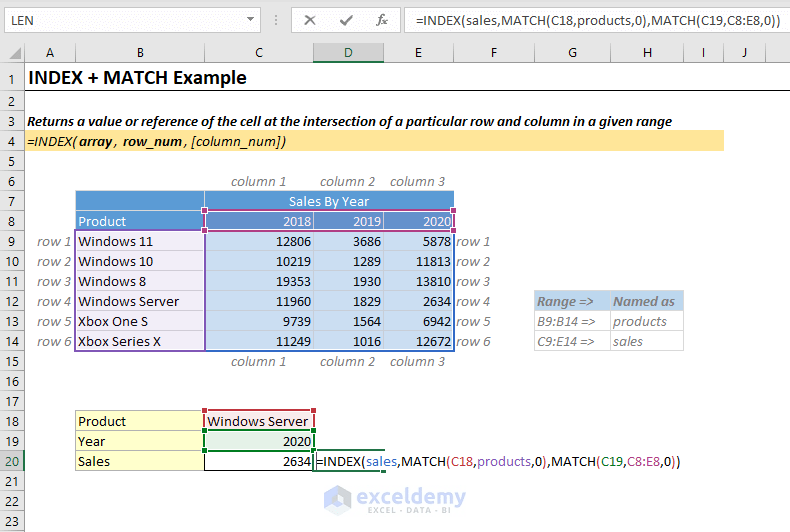
- Function: INDEX locates a value within a range based on row and column numbers, while MATCH finds the position of a value within a range.
- Benefit: Enables precise data retrieval, enhancing efficiency and accuracy in data analysis.
- Benefit: Facilitates dynamic data referencing, allowing formulas to adapt to changes in data.
- Benefit: Versatile for various data management tasks, including data validation, error checking, and report generation.
- Challenge: Mastering the syntax and understanding the nuances of the functions can be initially daunting.
- Challenge: Ensuring accurate results requires careful attention to detail and proper formula construction.
- Challenge: Performance considerations, especially with large datasets, may necessitate optimization techniques.
These key points serve as a foundation for delving deeper into the index and match tutorial. Through practical examples, we will explore how these functions work together to solve real-world data challenges. We will uncover their versatility in different scenarios, demonstrating how they can streamline workflows and improve data accuracy. Additionally, we will address common pitfalls and provide strategies for overcoming the challenges associated with these functions.
Definition
Within the vast realm of spreadsheet functionality, the "index and match" functions stand out as indispensable tools for data extraction and manipulation. These versatile functions empower users to pinpoint specific values, perform lookups, and dynamically reference data across different ranges and worksheets. Their ability to navigate and retrieve data with precision makes them essential for a wide range of data management tasks.
- Precise Value Retrieval: The INDEX function enables precise extraction of a single value from a specified range or array. This operation proves invaluable when working with large datasets or complex spreadsheets, allowing users to isolate specific data points with ease.
- Efficient Lookups: The MATCH function complements the INDEX function by identifying the position of a specified value within a range. This capability forms the foundation for performing efficient lookups, enabling users to find the row or column number corresponding to a given value.
- Dynamic Data Referencing: The combination of INDEX and MATCH functions facilitates dynamic data referencing. Formulas utilizing these functions can automatically adjust to changes in the underlying data, ensuring that the results remain accurate and up-to-date.
- Versatile Data Management: The versatility of index and match functions extends beyond data extraction and lookups. They prove equally adept at data validation, error checking, and report generation tasks. Their ability to manipulate and transform data makes them indispensable for a variety of spreadsheet-based applications.
The power of index and match functions lies in their ability to streamline data management processes, enhance data accuracy, and unlock new possibilities for data analysis. Their widespread adoption across various industries and applications underscores their immense value in the modern spreadsheet landscape.
Function
The connection between the function "INDEX locates a value within a range based on row and column numbers, while MATCH finds the position of a value within a range" and the "index and match tutorial" is profound and multifaceted.
The INDEX and MATCH functions serve as the cornerstone of the index and match tutorial, forming an essential foundation for understanding and mastering this powerful technique. The tutorial delves into the inner workings of these functions, explaining their syntax, arguments, and the underlying mechanisms that enable them to locate and retrieve data with precision.
The tutorial also explores the practical applications of the INDEX and MATCH functions in various scenarios, showcasing their versatility and problem-solving capabilities. Real-life examples illustrate how these functions can be harnessed to extract data from tables, perform lookups across multiple worksheets, consolidate data from different sources, and generate dynamic reports.
Furthermore, the tutorial emphasizes the importance of understanding the relationship between the INDEX and MATCH functions. By comprehending how these functions work together, users can unlock their full potential and leverage them to streamline their data analysis and manipulation tasks. The tutorial provides step-by-step instructions, clear explanations, and troubleshooting tips to help users overcome common challenges and achieve accurate and efficient results.
In summary, the "Function: INDEX locates a value within a range based on row and column numbers, while MATCH finds the position of a value within a range" stands as a crucial element of the "index and match tutorial." This tutorial empowers users to master these functions, enabling them to unlock the full potential of spreadsheets for data management and analysis.
Benefit
The "index and match" tutorial revolves around the fundamental benefit of enabling precise data retrieval, which significantly enhances efficiency and accuracy in data analysis. This benefit is deeply intertwined with the mechanisms and applications of the tutorial.
The INDEX and MATCH functions, which form the foundation of the tutorial, are specifically designed to pinpoint and extract specific values from within a range or array of data. This capability empowers users to retrieve data with precision, eliminating the need for manual searching or error-prone methods. By utilizing these functions, users can automate data retrieval tasks, ensuring accuracy and consistency in their analysis.
The efficiency aspect of data retrieval is equally important. The INDEX and MATCH functions work in tandem to optimize the retrieval process, minimizing the number of steps and operations required to locate and extract data. This streamlined approach saves time and effort, allowing users to focus on more complex and value-added tasks.
Furthermore, the ability to retrieve data with precision and efficiency directly contributes to the accuracy of data analysis. Precise data retrieval ensures that the analysis is based on the correct values, eliminating the risk of errors or misleading conclusions. By leveraging the "index and match" tutorial, users can enhance the reliability and credibility of their data analysis.
In summary, the benefit of enabling precise data retrieval, enhancing efficiency, and accuracy in data analysis lies at the heart of the "index and match" tutorial. Mastering these functions empowers users to streamline their data retrieval processes, minimize errors, and derive more accurate and reliable insights from their data.
Benefit
Within the realm of informatics, the connection between "Benefit: Facilitates dynamic data referencing, allowing formulas to adapt to changes in data." and "index and match tutorial" unfolds as a symbiotic relationship that empowers data manipulation and analysis.
Firstly, dynamic data referencing stands as a cornerstone of the "index and match tutorial." It serves as a catalyst, enabling formulas to remain adaptable and responsive to evolving data. This dynamic referencing capability eliminates the need for manual updates, minimizing the risk of errors and ensuring the integrity of data analysis.
Secondly, understanding and mastering dynamic data referencing form an integral part of the "index and match tutorial." It equips users with the ability to construct robust and flexible formulas that can automatically adjust to changes in the underlying data. This not only streamlines data management processes but also enhances the accuracy and reliability of data analysis.
Furthermore, the practical significance of dynamic data referencing extends beyond theoretical concepts. In real-world applications, it plays a pivotal role in automating complex data analysis tasks. For instance, in financial modeling, dynamic data referencing allows formulas to recalculate automatically based on changing market conditions, ensuring up-to-date and accurate financial projections.
In summary, the "Benefit: Facilitates dynamic data referencing, allowing formulas to adapt to changes in data." stands as a key pillar of the "index and match tutorial." Its transformative impact on data manipulation and analysis underscores its importance in the realm of informatics. Mastering this concept empowers users to create dynamic and adaptable formulas, enhancing the efficiency and accuracy of data-driven decision-making.
Benefit
The connection between "Benefit: Versatile for various data management tasks, including data validation, error checking, and report generation." and "index and match tutorial" unfolds as a symbiotic relationship, where the versatility of the index and match functions empowers efficient and accurate data management.
Firstly, the versatility of the index and match functions forms an essential element of the "index and match tutorial." These functions serve as the cornerstone for accomplishing various data management tasks, including:
- Data validation: Utilizing INDEX and MATCH enables the construction of formulas that automatically check for data accuracy and consistency.
- Error checking: By leveraging the dynamic referencing capabilities of index and match, formulas can be designed to identify and flag errors in data input or calculations.
- Report generation: The index and match functions facilitate the creation of dynamic reports that automatically update and reflect changes in the underlying data.
Secondly, the practical significance of the index and match functions extends beyond theoretical concepts. In real-world applications, their versatility translates into tangible benefits:
- Streamlined data management: Automating data validation, error checking, and report generation tasks saves time and effort, allowing professionals to focus on more strategic and value-added activities.
- Improved data quality: By employing the index and match functions, organizations can ensure the accuracy and consistency of their data, leading to better decision-making.
- Enhanced productivity: The ability to generate dynamic reports with minimal manual effort increases productivity and allows for faster and more informed decision-making.
In summary, the "Benefit: Versatile for various data management tasks, including data validation, error checking, and report generation." stands as a compelling reason for mastering the "index and match tutorial." Its transformative impact on data management underscores its importance in various industries and applications. Embracing this versatility empowers organizations to streamline their data management processes, improve data quality, and enhance productivity.
Challenge
In the realm of informatics, the "index and match" tutorial serves as a gateway to unlocking the full potential of spreadsheet applications. However, embarking on this tutorial can be met with a significant challenge: mastering the syntax and understanding the nuances of the INDEX and MATCH functions.
The syntax of these functions, involving an array of arguments and specific parameters, can be initially daunting, especially for beginners. Additionally, the underlying mechanisms and logical flow of the functions require a clear understanding to harness their full capabilities.
Overcoming this challenge is paramount for successful navigation of the "index and match" tutorial. It lays the foundation for comprehending the practical applications and problem-solving techniques that the tutorial imparts.
To illustrate the significance of mastering the syntax, consider a real-life scenario: A financial analyst tasked with consolidating data from multiple spreadsheets into a comprehensive report. Without a solid grasp of the INDEX and MATCH functions' syntax, the analyst may encounter difficulties in extracting specific values and combining data accurately.
In summary, mastering the syntax and understanding the nuances of the INDEX and MATCH functions is an essential component of the "index and match" tutorial. It empowers users to delve deeper into the tutorial's content and leverage these powerful functions to enhance their data manipulation and analysis skills.
Challenge
Within the landscape of the "index and match" tutorial, the challenge of ensuring accurate results stands as a pivotal aspect, demanding meticulous attention to detail and adherence to proper formula construction.
- Precise Syntax: Crafting the INDEX and MATCH functions requires utmost precision in adhering to their syntactical structure. Errors in syntax, such as incorrect function names, missing arguments, or misplaced parentheses, can lead to erroneous results, hindering the integrity of data analysis.
- Range and Reference Accuracy: The accuracy of results hinges upon the accurate specification of ranges and cell references within the INDEX and MATCH functions. Incorrect cell references or ranges can result in the retrieval of unintended values, distorting the analysis and potentially leading to misleading conclusions.
- Data Consistency: Ensuring consistency in data formatting and structure is paramount for the INDEX and MATCH functions to operate seamlessly. Inconsistent data formats, such as variations in capitalization, spelling, or number formats, can impede the functions' ability to locate and extract data accurately.
- Circular References: The construction of formulas involving INDEX and MATCH functions must vigilantly avoid circular references. Circular references, where a formula refers to itself directly or indirectly, can lead to erroneous calculations and unstable results, compromising the reliability of the analysis.
Mastering these facets of proper formula construction is instrumental in ensuring the accuracy and integrity of results obtained from the INDEX and MATCH functions. By exercising meticulous attention to detail and adhering to these guidelines, users can harness the full potential of these functions to derive accurate and reliable insights from their data.
Challenge
Within the realm of the "index and match" tutorial, performance considerations emerge as a crucial factor, particularly when dealing with expansive datasets. As the volume of data grows, the computational demands placed on the INDEX and MATCH functions intensify, potentially leading to noticeable delays and hindering the overall efficiency of data analysis.
- Formula Complexity: The intricacy of INDEX and MATCH formulas, involving nested functions and extensive range references, can contribute to slower calculation times. Optimizing these formulas by minimizing unnecessary nesting and streamlining range references can alleviate performance bottlenecks.
- Dataset Size: The sheer size of the dataset subjected to INDEX and MATCH operations plays a significant role in performance. As the number of rows and columns increases, the functions require more time to locate and retrieve data, potentially causing delays.
- Volatile Functions: The employment of volatile functions, such as OFFSET or INDIRECT, within INDEX and MATCH formulas can introduce additional computational overhead. These functions recalculate their values upon any change in the worksheet, potentially slowing down performance, especially in large datasets.
- Hardware Limitations: The capabilities of the computer system running the spreadsheet also influence performance. Limited memory or a slower processor can exacerbate performance issues, particularly with large datasets and complex formulas.
Addressing these performance considerations is essential for ensuring the efficiency and practicality of the "index and match" tutorial. By adopting optimization techniques, such as simplifying formulas, utilizing efficient range references, avoiding volatile functions when possible, and ensuring adequate hardware resources, users can mitigate performance bottlenecks and unlock the full potential of the tutorial's teachings in handling large datasets.
Frequently Asked Questions
This section aims to address common queries and clarify aspects of the "index and match" tutorial, providing concise and informative answers to anticipated reader questions.
Question 1: What are the primary benefits of utilizing the INDEX and MATCH functions?
Answer: The INDEX and MATCH functions offer several advantages, including precise data retrieval, dynamic data referencing, versatility in data management tasks, and enhanced efficiency in data analysis and manipulation.
Question 2: Can the INDEX and MATCH functions be used to perform data validation and error checking?
Answer: Yes, the INDEX and MATCH functions, when combined with appropriate formulas, can be effectively employed for data validation and error checking, ensuring the accuracy and integrity of data.
Question 3: How can I optimize the performance of INDEX and MATCH functions when working with large datasets?
Answer: Optimizing performance involves techniques such as minimizing formula complexity, utilizing efficient range references, avoiding volatile functions, and ensuring adequate system resources. These measures help mitigate performance bottlenecks and enhance the efficiency of data analysis.
Question 4: What are some common challenges faced by users when working with INDEX and MATCH functions?
Answer: Common challenges include mastering the syntax, ensuring accurate results, considering performance implications, and avoiding circular references. Addressing these challenges requires careful attention to detail, proper formula construction, and optimization techniques.
Question 5: Can the INDEX and MATCH functions be used to consolidate data from multiple sources?
Answer: Yes, the INDEX and MATCH functions, in conjunction with other functions like VLOOKUP and HLOOKUP, enable the consolidation of data from diverse sources into a centralized location, facilitating comprehensive data analysis.
Question 6: Are there any alternative functions or techniques that can be used instead of INDEX and MATCH?
Answer: While INDEX and MATCH form a powerful combination, alternative functions like VLOOKUP, HLOOKUP, and OFFSET can serve specific data retrieval needs. Additionally, pivot tables and data validation tools offer alternative approaches to data analysis and management.
These frequently asked questions provide insights into common queries and challenges associated with the "index and match" tutorial. The next section will delve deeper into advanced applications of these functions, exploring scenarios and techniques that unlock their full potential for data manipulation and analysis.
Tips for Mastering the 'Index and Match' Tutorial
This section provides a compendium of practical tips to enhance your proficiency in the 'index and match' tutorial. By incorporating these techniques into your workflow, you can harness the full potential of these functions and elevate your data analysis capabilities.
Tip 1: Understand the Syntax: Grasping the proper syntax of the INDEX and MATCH functions is paramount. Familiarize yourself with the required arguments, their order, and the correct usage of range references.
Tip 2: Utilize Dynamic Ranges: Enhance the adaptability of your formulas by utilizing dynamic ranges. This allows the functions to automatically adjust to changes in the underlying data, ensuring accuracy and reducing the need for manual updates.
Tip 3: Avoid Circular References: Exercise caution to avoid introducing circular references when constructing formulas involving INDEX and MATCH. Circular references can lead to erroneous results and hinder the stability of your spreadsheets.
Tip 4: Optimize Performance: For large datasets, consider optimizing the performance of your INDEX and MATCH formulas. Techniques such as minimizing formula complexity and utilizing efficient range references can mitigate performance bottlenecks.
Tip 5: Combine Functions: Expand the functionality of INDEX and MATCH by combining them with other functions. VLOOKUP, HLOOKUP, and OFFSET can complement INDEX and MATCH, enabling you to perform more complex data retrieval and manipulation tasks.
Tip 6: Utilize Named Ranges: Enhance the readability and maintainability of your spreadsheets by utilizing named ranges. Assigning meaningful names to ranges makes formulas easier to understand and reduces the risk of errors.
Tip 7: Understand Error Handling: Equip yourself with the knowledge to handle errors that may arise when using INDEX and MATCH functions. Functions like ISERROR and IFERROR can help you gracefully handle errors and ensure the reliability of your results.
Tip 8: Practice Regularly: Proficiency in using INDEX and MATCH functions comes with practice. Dedicate time to experimenting with different scenarios and challenging yourself with complex data manipulation tasks.
By implementing these tips, you can refine your skills, optimize your workflow, and unlock the full potential of the 'index and match' tutorial. These techniques will empower you to tackle complex data challenges with confidence and derive valuable insights from your data.
The concluding section of this article will reinforce the significance of these tips and their impact on your overall data analysis capabilities. By embracing these techniques, you will be well-equipped to harness the power of INDEX and MATCH functions and elevate your data analysis skills to the next level.
Conclusion
The "index and match" tutorial unfolds as a gateway to unlocking the transformative power of spreadsheets, empowering users to navigate and manipulate data with precision and efficiency. Through the exploration of real-world scenarios and practical applications, the tutorial unveils the versatility of INDEX and MATCH functions in streamlining data management processes and enhancing data analysis.
Key insights gleaned from this exploration underscore the importance of:
- Syntax Mastery: Understanding the syntax and nuances of INDEX and MATCH functions is crucial for harnessing their full potential and avoiding common pitfalls.
- Accuracy and Performance: Ensuring accurate results and optimizing performance are essential considerations, especially when working with large datasets and complex formulas.
- Dynamic Applications: Combining INDEX and MATCH with other functions and employing dynamic ranges opens up a world of possibilities for solving complex data challenges.
The "index and match" tutorial serves as a catalyst, igniting a journey of discovery and mastery. Embracing the techniques and strategies outlined in this tutorial empowers individuals to unlock the true potential of spreadsheets and transform data into actionable insights, driving better decision-making and propelling organizations towards success.